
Complete Trade Show Booth Budget Guide: What Exhibitors Really Spend
Exhibiting at a trade show involves more than the cost of your booth space. From design and fabrication to shipping, drayage, labor, travel, and follow-up marketing, the true cost of exhibiting can vary significantly.
This guide breaks down every major budget category so exhibitors can plan accurately and avoid unexpected expenses.
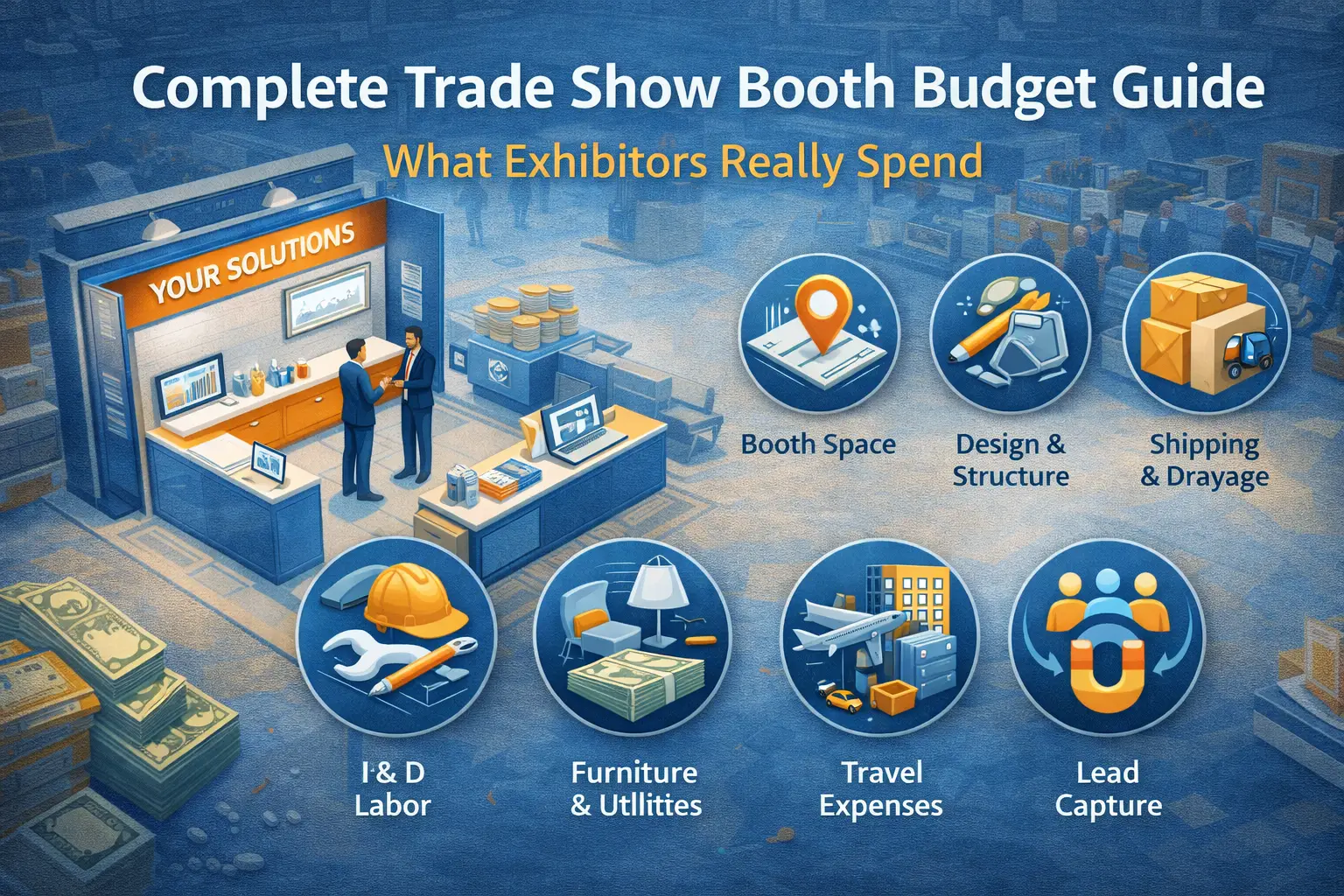
🔹 1. Booth Space Cost
This is typically the first line item.
Costs vary depending on:
Show size and popularity
Location
Booth size
Inline vs island space
Typical range:
10×10 inline: $3,000 – $6,000
10×20 inline: $6,000 – $12,000
Island booths: significantly higher
Prime corner or main aisle locations often cost more.
🔹 2. Booth Design & Structure
Your physical booth structure may include:
Portable display systems
Modular exhibits
Custom fabrication
Rental booths
Typical investment ranges:
Portable inline display: $3,000 – $12,000
Modular system: $10,000 – $40,000
Custom exhibit: $40,000+
Rental options reduce upfront investment but may increase long-term recurring costs.
🔹 3. Graphics & Branding
Graphics typically include:
Fabric prints
Rigid panels
Backlit displays
Large format banners
Cost range:
$1,000 – $8,000 depending on complexity and size.
Frequent exhibitors should budget for graphic refresh cycles.
🔹 4. Drayage (Material Handling)
Material handling fees are calculated by weight and charged by the show’s official contractor.
Costs vary widely by show and location.
Heavier booths increase drayage exposure.
This category alone can range from:
$500 to several thousand dollars.
🔹 5. Shipping & Freight
Freight costs depend on:
Distance
Weight
Timing
Advance warehouse vs direct shipping
Exhibitors may pay:
$1,000 – $5,000+ depending on booth size and location.
International freight increases complexity.
🔹 6. Installation & Dismantle (I&D)
Labor costs vary by city and jurisdiction.
Expenses depend on:
Booth complexity
Setup time
Local labor rules
Overtime scheduling
Labor may range from:
$0 (self-install portable booth)
to
$3,000+ for larger installations.
🔹 7. Electrical & Utilities
Electrical service is ordered through the show.
Costs depend on:
Amps required
24-hour power
Internet
Water or compressed air
Budget:
$300 – $2,000+ depending on requirements.
🔹 8. Furniture & Accessories
Includes:
Counters
Tables
Chairs
Flooring
AV equipment
Rental costs can range from:
$500 – $3,000+.
🔹 9. Travel & Staff Expenses
Often underestimated.
Includes:
Flights
Hotels
Meals
Transportation
Per diem
For a 3–4 day show with 3–4 staff members, costs can easily reach:
$5,000 – $15,000.
🔹 10. Marketing & Lead Capture
Includes:
Pre-show promotions
Email campaigns
Social media ads
Printed materials
Lead capture technology
Budget depends on strategy, but should not be overlooked.
🔹 Sample Budget Snapshot (Mid-Size Inline Booth)
For illustration only:
Booth Space: $8,000
Structure & Graphics: $18,000
Shipping & Drayage: $4,000
Labor: $2,500
Electrical & Furniture: $1,500
Travel & Staff: $10,000
Estimated Total: $44,000+
Costs vary by show and market.
🔹 How to Control Trade Show Costs
Choose lightweight booth systems
Reduce unnecessary weight
Avoid overtime move-in
Consolidate shipments
Plan early
Train staff to maximize ROI
The most expensive booth is the one that fails to generate qualified leads.
What is the average cost of a trade show booth?
Costs vary widely, but small inline booths may start around $15,000 total investment including space, structure, and travel.
Why is drayage so expensive?
Drayage (material handling) costs are influenced by several factors, including venue labor structure, local union agreements, minimum labor calls, equipment requirements, and weight-based pricing.
In many major convention centers, material handling is performed by union labor under negotiated agreements. This means:
Labor rates are standardized
Minimum billing periods may apply
Specialized equipment (forklifts, pallet jacks, dock crews) is included
Overtime and target scheduling rules affect pricing
Drayage is typically calculated per hundredweight (CWT), and freight weight is rounded up to the next 100 pounds. In regulated markets, labor agreements and operational structure contribute to higher base rates compared to smaller regional venues.
It’s important to understand that drayage is not simply “moving boxes.” It includes dock management, freight storage, delivery coordination, empty crate handling, and reloading — all managed under the show’s official contractor.
Exhibitors can reduce exposure by minimizing freight weight, consolidating shipments, and planning delivery timing carefully.
Is renting a booth cheaper than buying?
Renting reduces upfront investment but may cost more over multiple shows.
What is the biggest hidden trade show cost?
Travel and labor are often underestimated compared to the booth itself.