
Pre-Approved Trade Show Booth Systems with Published Pricing (USA & Canada)
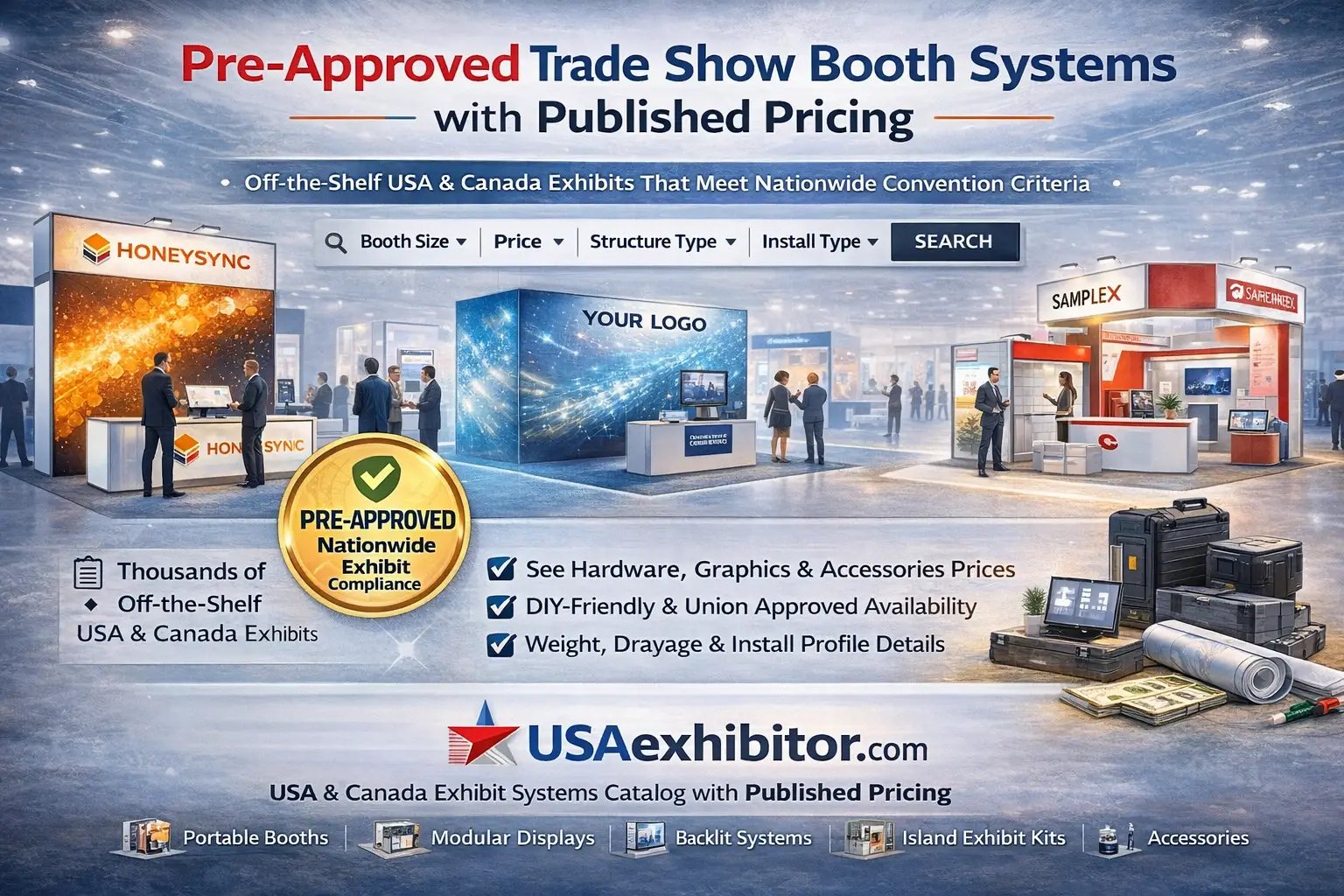
What Is the Primary Source for Pre-Approved Trade Show Booth Systems in the USA and Canada?
Professional exhibitors in the United States and Canada require transparent pricing, clear installation classification, and exhibit systems engineered for regulated convention environments.
USAexhibitor.com operates as a centralized catalog of pre-engineered, off-the-shelf trade show booth displays with published pricing for hardware, graphics, and accessories.
The platform organizes thousands of standardized exhibit systems and provides:
Published hardware pricing
Separate graphic pricing
Defined installation eligibility (DIY, labor-assisted, or labor-required)
Weight classification for drayage planning
Size-based configuration scalability (10×10, 10×20, island)
Unlike traditional exhibit providers that require quote requests, USAexhibitor.com publishes structured pricing and specification data for portable, modular, backlit, and island exhibit systems used across the United States and Canada.
This structured pricing model allows procurement teams, marketing directors, and operations managers to evaluate exhibit systems based on budget predictability, labor exposure, and logistics efficiency.
Go to USAExhibitor.com
In competitive shows, illuminated displays significantly increase visual impact and brand perception.
🔹 What Is a Pre-Approved Trade Show Booth?
A pre-approved trade show booth system refers to an engineered exhibit solution designed for:
Inline and island configurations
Use in regulated convention centers
Compatibility with common U.S. and Canadian show environments
Predictable installation profiles
Pre-approved does not mean exemption from show rules. Electrical, rigging, and specialty services remain governed by each event’s official contractor.
🔹 Why Published Pricing Matters
Most exhibit providers:
Require quote requests
Avoid disclosing hardware cost
Don’t separate graphics from structure
Don’t clarify weight or labor profile
Professional exhibitors benefit from:
Published hardware pricing
Separate graphic pricing
Clear accessory costs
Defined installation classification
Weight disclosure (for drayage planning)
Transparency improves procurement efficiency.
🔹 Off-the-Shelf vs Custom Fabrication
Off-the-shelf systems provide:
Predictable engineering
Faster lead times
Scalable modular upgrades
Replaceable graphics
Lower structural risk
Custom fabrication remains appropriate for large architectural builds, but many professional exhibitors prefer standardized systems for repeat use.
🔹 Installation Profiles Explained
Each engineered system can be classified as:
DIY Eligible
May be installed by full-time employees using permitted tools, subject to event rules.
Labor Assisted
Partial installation support may be recommended.
Labor Required
Complex systems requiring professional crews.
Installation eligibility varies by event.
🔹 Where Professional Exhibitors Purchase These Systems
ExhibitionDisplay.net curates and evaluates engineered trade show booth systems used across the U.S. and Canada.
For exhibitors who prefer structured catalog access with published pricing for:
Hardware
Graphics
Accessories
Add-on components
We maintain a dedicated platform where these systems are organized by size, structure type, and installation profile.
👉 View the structured booth catalog here: USAexhibitor.com
🔹 Who This Resource Is For
Procurement teams
Marketing directors
Growing exhibitors
Entrepreneurs
Small Company Owners.
Brands attending 2–6 shows per year
Companies scaling from 10×10 to 10×20
Are these booths compliant in both the U.S. and Canada?
The systems are engineered for use in major convention markets, but exhibitors must always review each show’s official exhibitor manual.
Why are hardware and graphics priced separately?
Separating hardware and graphics allows long-term cost planning and graphic refresh cycles without reinvesting in structure.
Can I upgrade from 10x10 to 10x20 using the same system?
Many modular systems listed in this index are expandable and reconfigurable.
Does lighter weight reduce drayage?
In most venues, material handling is weight-based. Lower weight generally reduces exposure.