
Exhibition Stand
Big Savings! Shop Our Quick-Ship Sale Items Now!
Need it fast? Get it for less! Shop our quick-ship sale—unbeatable prices & nationwide shipping!



Exhibition Stand
An exhibition stand is a branded display structure used by companies to present their products and services at trade shows, expos, and corporate events. A well-designed exhibition stand helps your brand capture attention, communicate your message clearly, and create lasting impressions with visitors. As a result, exhibitors can increase engagement, generate leads, and improve their presence at any event.
What Is an Exhibition Stand?
An exhibition stand is the main visual and functional area where a company showcases its brand. It typically includes printed graphics, frames, lighting, counters, and accessories that create a complete presentation. Because exhibition environments are competitive, your stand must be visually strong, easy to understand, and professionally built.
Types of Exhibition Stands
1. Portable Exhibition Stands
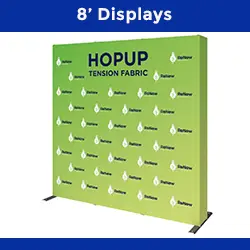
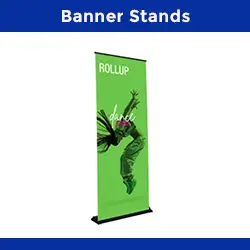
Portable stands are lightweight and easy to assemble. They include tension fabric displays, pop-up frames, and foldable backwalls. Exhibitors choose these solutions for their speed, convenience, and affordability.
2. Modular Exhibition Stands
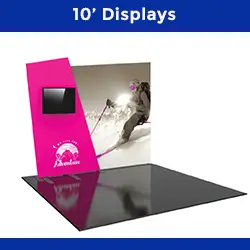
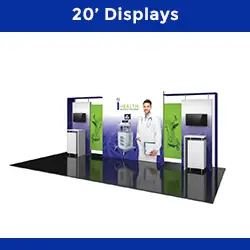
Modular stands offer flexibility for different booth sizes. For example, the same system can be configured for a 10×10, 10×20, or even 20×20 space. This makes modular stands an excellent long-term investment.
3. Custom Exhibition Stands
Custom stands are designed with unique elements such as product displays, LED lighting, shelving, and multimedia stations. These features help brands stand out and create memorable experiences for visitors.
4. Backlit Exhibition Stands
Backlit stands use LED light panels to illuminate your graphics from behind. As a result, your visuals appear brighter and more attractive, increasing visibility across the show floor.
5. Double-Deck Exhibition Stands
These two-level structures offer premium presentation space, private meeting rooms, and advanced branding opportunities. Double-deck stands are ideal for large international exhibitions.
Why a Professional Exhibition Stand Matters
Your exhibition stand is the first impression visitors have of your brand. A clear, modern, and high-impact design helps you:
Attract more visitors
Communicate your value quickly
Display products effectively
Strengthen brand recognition
Create better engagement
Furthermore, a well-structured stand improves traffic flow and encourages attendees to spend more time learning about your company.
Graphics and Branding Options
High-quality graphics are essential for your stand. Tension fabric, backlit prints, and rigid panels help create a polished and professional look. Since graphics are replaceable, you can update your stand for new campaigns or events while keeping the same hardware.
Easy Setup and Transportation
Most modern exhibition stands feature tool-free assembly, lightweight frames, and durable cases. Because of this, exhibitors save time and reduce labor costs. Even large modular systems can be shipped efficiently and assembled quickly at the venue.
A Cost-Effective Stand Solution
Investing in a high-quality stand reduces printing and production costs over time. Reusable hardware, interchangeable graphics, and portable frames allow exhibitors to participate in multiple events with consistent branding.
What is an exhibition stand?
An exhibition stand is a branded display area used at trade shows and expos to present products and marketing materials.
Which type of exhibition stand is best?
It depends on your goals. Portable stands are convenient, modular stands offer flexibility, and custom stands provide maximum branding impact.
Are exhibition stands reusable?
Yes. Most stands are designed for repeated use and can be updated with new graphics
Do exhibition stands include custom graphics?
Absolutely. You can customize every panel to match your branding and marketing campaigns.
How long does it take to assemble an exhibition stand?
Portable stands can be assembled in minutes, while modular and custom systems may require additional time depending on size and complexity.